
Truth, Transformation, and Collective Care in Barrie and Simcoe County


Healing begins when truth is met with care, not denial, dismissal, or silence.
For Black communities, and especially for Black queer, trans, nonbinary, Two Spirit, and gender diverse people, healing has never been a private matter alone. Our wounds have often been shaped by public systems, public policies, public neglect, and public violence. So our healing must also be collective. It must be held in community, rooted in memory, guided by justice, and protected by people who understand that survival is not the same as freedom.
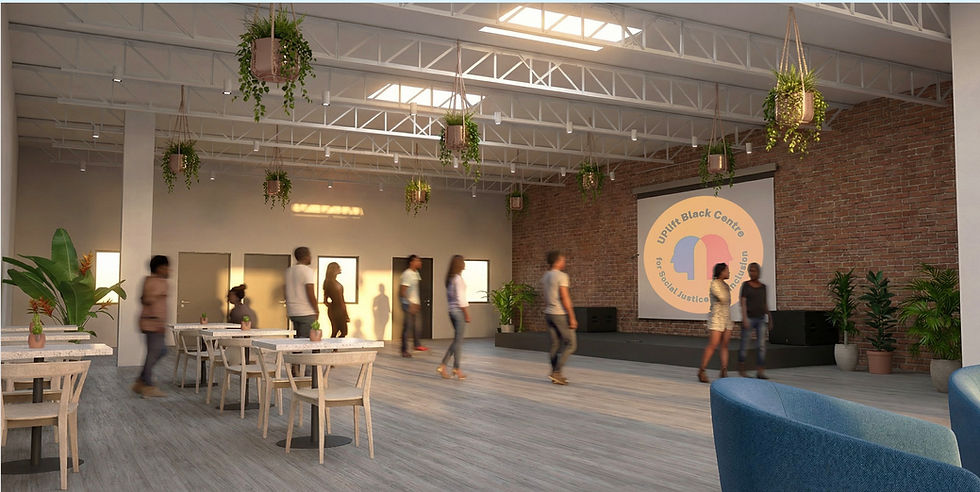
At UPlift Black, this work is not abstract. It lives in rooms where people can exhale. It lives in conversations where someone tells the truth without having to soften it for comfort. It lives in the steady practice of building intentional sanctuaries across Barrie and Simcoe County, places where Black people and 2SLGBTQI+ communities can be witnessed, believed, supported, and invited into possibility.
Truth is not only what happened. Truth is also what we need now.
That truth may sound like a survivor naming harm that was ignored for years. It may sound like a young person saying they are tired of being the only Black student in the room. It may sound like a Black trans person explaining that safety cannot be reduced to a rainbow sticker on a door. It may sound like an elder remembering what this region has asked Black families to carry in silence.
When truth has space to breathe, transformation becomes possible.
We come from traditions that know healing is collective
Afrocentric care teaches us that people are not disposable. Our lives are tied to one another. Our freedom is bound together. Our grief, joy, rage, memory, and future all belong inside the circle.
Sankofa reminds us to return to what has been left behind, not to stay in the past, but to gather what we need for the road ahead. In Black communities, memory is medicine. We learn from elders, from ancestors, from movements, from mistakes, and from the everyday acts of care that helped our people survive impossible conditions.
Ma'at calls us back to balance, truth, justice, and right relationship. It asks more from us than individual kindness. It asks whether our systems tell the truth. It asks whether our policies repair harm. It asks whether our institutions treat Black life as sacred, not as a problem to manage.
Ubuntu teaches, I am because we are. This is not a slogan. It is a responsibility. It means that no one should have to earn dignity. It means our liberation work must include those pushed furthest to the margins. It means community care cannot be selective.
Harambee calls us to pull together. Not perform together. Not pose together. Pull together. It asks what we are willing to carry, change, and build when the cameras are gone and the meeting is over.
These principles are not decorative. They shape how UPlift Black understands sanctuary, advocacy, programming, and accountability. They remind us that care without justice becomes comfort for the powerful. Justice without care can leave our people exhausted and alone.
Collective care is more than crisis response
Many people only think about care when someone is already in crisis. A person loses housing. A young person is harmed at school. A family experiences racism in a service setting. A survivor reaches out after violence. A community member is grieving and cannot find culturally safe support.
Crisis response matters. Immediate support can be life preserving. But collective care cannot begin and end there.
Collective care also means creating the conditions where people are less likely to be pushed into crisis in the first place. It means asking why Black residents face barriers when seeking mental health support, housing, employment, education, health care, and safety. It means naming how anti Black racism, transphobia, homophobia, ableism, poverty, colonial violence, and gender based violence intersect in real lives.
A sanctuary is not just a room. It is a commitment.

It is a commitment to believe survivors.
It is a commitment to protect Black joy without ignoring Black pain.
It is a commitment to honour chosen family, not only biological family.
It is a commitment to make space for grief and laughter in the same breath.
It is a commitment to understand that some people arrive carrying harm from the very systems that were supposed to help them.
In Barrie and Simcoe County, sanctuary matters because isolation is real. Black residents are often asked to navigate spaces where their experiences are minimized or misunderstood. Black 2SLGBTQI+ people may face racism in queer spaces and queer or trans hostility in Black spaces. Survivors may be told to report harm to systems that have already failed them. Newcomers may be expected to adapt quickly while carrying migration stress, family separation, racism, and economic pressure.
Collective care answers isolation with relationship. It says, you do not have to carry this alone, and you do not have to disappear to be safe.
Survivor leadership changes the centre of the work
Too often, institutions speak about survivors while leaving survivors out of decisions. They design services without asking what safety means to people who have been harmed. They use language of support while keeping control in the same hands.
Survivor leadership shifts that pattern.
It recognizes that people who have lived through violence, exclusion, policing, poverty, family rejection, medical racism, spiritual harm, or community betrayal carry knowledge that cannot be learned from a manual. That knowledge is not only pain. It is strategy. It is wisdom. It is warning. It is vision.
A survivor led approach asks different questions.
What would have helped before the harm escalated?
Who did you trust, and why?
What made the situation worse?
What did systems demand from you that felt unsafe?
What does repair look like when punishment is not enough?
What do you need to feel whole, not only helped?
Black transfeminist values deepen this work. They insist that those most often pushed aside must be seen as thinkers, builders, and leaders. They teach that liberation cannot be measured by the comfort of those already closest to power. They ask us to take seriously the lives of Black trans women, Black nonbinary people, Black queer youth, Black disabled people, Black migrants, Black sex workers, Black survivors, Black parents, Black elders, and all those whose truths are too often edited out of public concern.
When the people most impacted help shape the path forward, care becomes more honest.
That honesty can be uncomfortable. It can challenge familiar ways of working. It can ask organizations to slow down, listen better, share power, and repair trust before asking for participation. But that discomfort is part of transformation. A community cannot heal while protecting the habits that caused harm.
Systemic equity asks for more than good intentions
Good intentions do not undo structural harm. Kind words do not guarantee safe access. Representation alone does not transform systems.
Systemic equity asks harder questions.
Who has access to decision making?
Who receives funding and who is expected to volunteer?
Whose pain is seen as urgent?
Whose anger is called inappropriate?
Whose leadership is trusted?
Who is asked to educate others while also surviving harm?
Who can enter a service space without hiding parts of themselves?
Across Barrie and Simcoe County, these questions belong in schools, shelters, health care settings, arts spaces, faith communities, local government, social services, workplaces, youth programs, and public safety conversations. They also belong inside community organizations, including our own. No organization is beyond reflection. No movement is beyond accountability.
Equity is not a statement on a wall. Equity is what changes when people tell the truth.
That change might look like community led training that moves beyond checklists. It might look like safer referral pathways for Black survivors. It might look like honouring Black queer and trans leadership with resources, not only applause. It might look like making sure youth programs understand race, gender, disability, poverty, and family realities together. It might look like policies that protect people from retaliation when they report harm. It might look like asking community members what safety means before building a safety plan.
Transformation also requires patience with process and urgency about harm. Both can be true. Communities need time to build trust, and people experiencing harm need action now. The work is to hold both realities with care.
Truth telling can be sacred work
Truth telling is not always loud. Sometimes it comes through tears. Sometimes it comes through silence after years of performing strength. Sometimes it comes through art, song, food, prayer, ceremony, movement, testimony, or a single sentence that changes the room.
For many Black people, truth telling carries risk. Speaking openly about racism can lead to being labelled difficult. Speaking openly about queer or trans identity can lead to rejection. Speaking openly about violence can lead to blame. Speaking openly about mental health can lead to shame. Speaking openly about institutional harm can lead to retaliation or disbelief.
That is why collective care must protect truth tellers.
Protection does not mean speaking over someone. It means creating conditions where they can choose what to share, when to share it, and with whom. It means respecting confidentiality. It means not turning someone’s story into proof of an organization’s goodness. It means refusing to consume pain as content.
People are not case studies. People are whole worlds.

When UPlift Black creates intentional sanctuary, the goal is not to extract stories. The goal is to make room for people to be more than what happened to them. A survivor may also be a parent, an artist, a friend, a student, a caregiver, a dreamer, a teacher, a neighbour, a dancer, a strategist, a person who deserves rest.
Healing work must leave space for fullness.
Local care matters in Barrie and Simcoe County
Place shapes experience. Barrie and Simcoe County are not Toronto, Ottawa, or any other major urban centre. The realities here include distance, transit barriers, smaller community networks, fewer culturally specific services, and the deep visibility that can come with living in a smaller region. For Black and 2SLGBTQI+ people, that visibility can bring both connection and vulnerability.
A young person may avoid seeking support because they worry someone will know their family. A survivor may not want to attend a service where staff do not understand anti Black racism. A newcomer may not know where to find culturally grounded support. A Black queer person may feel forced to choose which part of themselves gets care.
Local work must respond to local realities. It cannot simply copy models from larger cities and assume they will fit. It must be relational, flexible, culturally grounded, and accountable to the people who live here.
That is part of what makes Truth, Transformation, and Collective Care in Barrie and Simcoe County so vital. The work calls us to build supports that reflect this place, while staying connected to broader Black liberation movements and 2SLGBTQI+ justice across Ontario and beyond.
Collective care is built in everyday choices
Transformation can sound large, and it is. But it also lives in everyday choices.
It lives when a service provider slows down and listens without defensiveness.
It lives when a school names anti Black racism clearly and supports Black students before harm escalates.
It lives when a community member checks on someone after the event is over.
It lives when local organizations pay Black facilitators, artists, healers, elders, and youth for their labour.
It lives when a group refuses to invite Black people into unsafe spaces just to appear inclusive.
It lives when people practise accountability without abandoning each other.
It lives when we make room for rest as part of resistance.
Care does not always look soft. Sometimes care is a boundary. Sometimes care is a policy change. Sometimes care is public truth. Sometimes care is refusing to let harm be hidden behind politeness.
Love for community must be strong enough to tell the truth.
That kind of love is not performative. It is not seasonal. It does not arrive only during Black History Month or Pride. It stays. It learns. It repairs. It shares resources. It listens when the answer is uncomfortable. It follows the leadership of those most affected.
We are building more than programs

Programs matter. Workshops, gatherings, advocacy, support circles, public education, and partnerships all have a place. But UPlift Black is building something deeper than a list of activities.
We are building a culture of care.
A culture where Black people are not asked to shrink.
A culture where queer and trans people are not treated as side conversations.
A culture where survivors are not pressured to forgive before they are safe.
A culture where youth can imagine futures beyond survival.
A culture where elders are honoured for what they have carried and what they still teach.
A culture where organizations understand that partnership means shared responsibility.
This kind of culture is not built by one person or one organization alone. It takes community members, local leaders, educators, artists, health workers, faith leaders, neighbours, funders, and public institutions willing to do the real work. It takes people who are ready to move beyond statements and into relationship.
Relationship is where trust grows. Trust is where truth becomes possible. Truth is where transformation begins.
Our invitation is simple and serious
If you are a Black community member in Barrie or Simcoe County seeking a place where your truth can be held with care, UPlift Black is here.
If you are a Black queer, trans, nonbinary, Two Spirit, or gender diverse person looking for community that honours the fullness of who you are, UPlift Black is here.
If you are a survivor, a youth, an elder, a parent, a neighbour, an artist, a caregiver, or someone still finding the words for what you have carried, UPlift Black is here.
If you are part of a local organization, school, service agency, faith space, public institution, or community group ready to move from intention to action, we invite you to connect with us in humility, honesty, and shared purpose.
Healing is not isolation. Healing is truth held in community, care shaped by justice, and transformation built together.
Across Barrie and Simcoe County, there is work to do and there is wisdom already among us. Let us gather it through Sankofa. Let us ground it in Ma'at. Let us live it through Ubuntu. Let us move it through Harambee.
Come build with UPlift Black. Come listen, learn, repair, create, and act. Our communities deserve sanctuaries that do more than welcome us. We deserve spaces that protect our truths, honour our lives, and help us transform the conditions that made sanctuary necessary in the first place.



Comments